Apple September 2026 Event Recap

September is, as always, the most important month on Apple’s calendar. It’s the month the iPhone gets its yearly refresh, and every year we go through the same ritual of rumors, leaks, and speculation. But this year actually feels different, because for the first time in a long while there’s a genuinely new product on the table: the foldable iPhone. After months — arguably years — of rumors, we finally got to see it for real.
Intro
The show opened the way Apple shows always open these days: a short film shot on iPhone, all sweeping intro shots that make you forget you’re watching a phone commercial. It eventually lands us at Apple Park, and — no, not Tim Cook. Well, sort of. Cook shows up just long enough to give a warm sendoff and hand the mic to the new main character of the show: incoming CEO John Ternus.
From there it’s the usual boilerplate about Apple, AI, and how the company’s technology is supposed to make life better “not just for you, but for the world.” The centerpiece of the pitch this year is what Apple is calling its Intelligent Personal Hub — its vision of a truly personal AI assistant, built around on-device models and a “seamless” experience that, unsurprisingly, ends up being an iPhone. The company leaned hard into privacy as the differentiator: you’re not the product, and this is personal intelligence that’s actually personal.
iPhone 18 Pro & iPhone 18 Pro Max
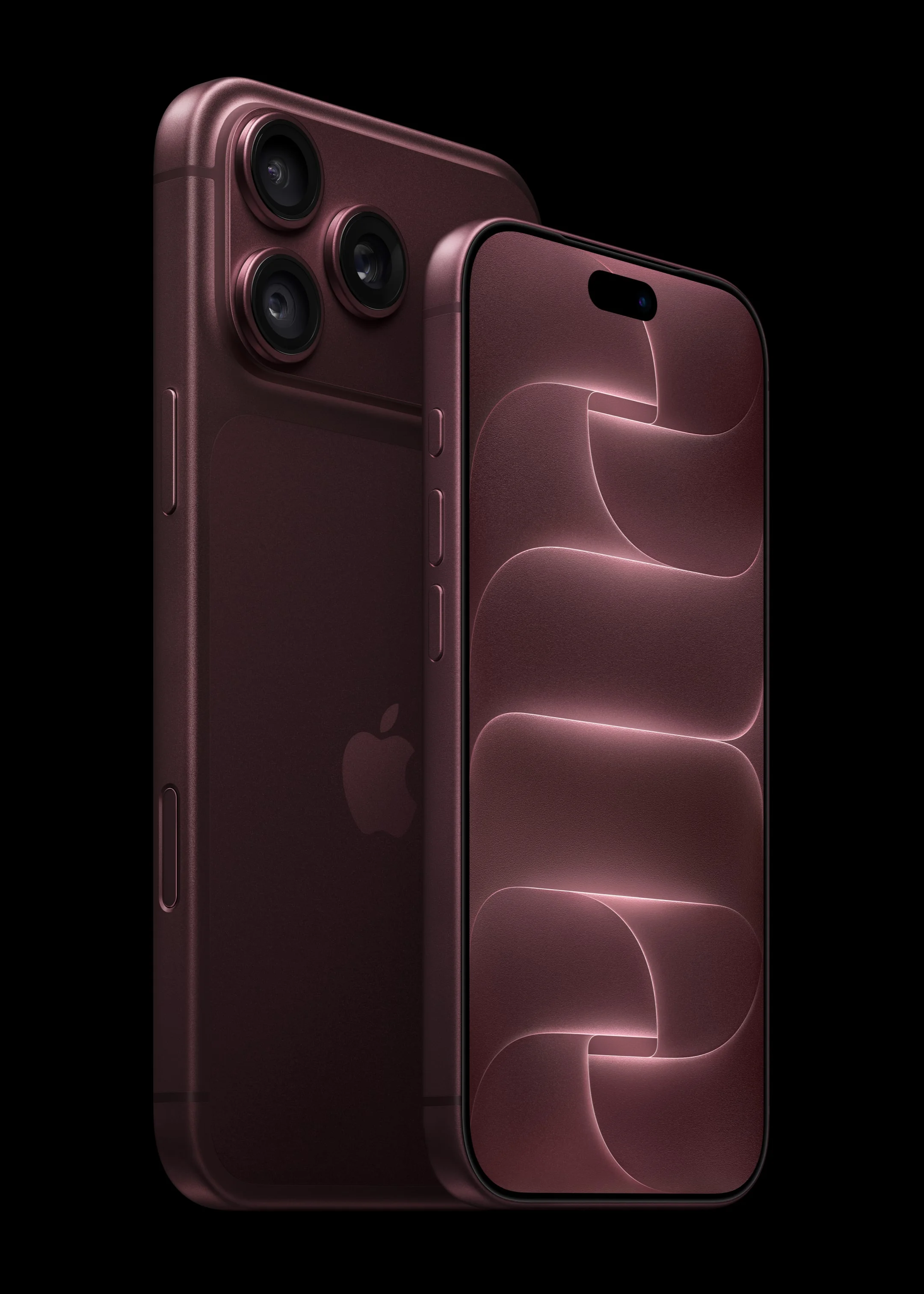
The Pro segment opened with a genuine flex: real iPhone 17 Pro footage captured by the Artemis II astronauts. From there came the obvious rhetorical question — “when you’ve been to the moon, where do you go next?” — more flexing dressed up as a tagline.
Intelligence. The AI pitch is built around helpful, on-device Apple Foundation Models and a more capable Siri, which Apple says now handles 2.5 billion requests a day. There were more demos of Siri digging through personal context — like recalling details from a conversation you had with your mom — alongside a richer conversational experience through the new Siri app first previewed at WWDC ‘26. There’s also an expressive voice feature that lets you customize how Siri sounds. Much of this had already been shown off at WWDC, so this felt more like a recap than a reveal, right down to the usage limits Apple mentioned for requests that get routed to external models.
Performance. The new A20 Pro is built on 2nm process technology, with a 6-core CPU (2 “super cores” plus 4 efficiency cores) — Apple’s calling the super cores desktop-class this time. There’s a 7-core GPU with a 40% performance bump and neural accelerators, plus a dual neural engine totaling 32 cores, a 50% increase in memory bandwidth, and custom packaging to tie it all together. Apple used a Monster Hunter demo to show off the horsepower — you have to wonder what that placement cost them. On the thermal side, there’s a new vapor chamber with three times the surface area of the one in the iPhone 17 Pro, plus nanotwin copper for better sustained performance under load.
Battery. The efficiency gains from the A20 Pro apparently let Apple shrink the battery while holding performance steady — Apple’s quoting 36 hours of video playback on the Pro and 45 hours on the Pro Max. Wired charging is fast too: 50% charge in 15 minutes, and just 5 minutes on the cable nets you 6 hours of video playback.
Camera. The new 48MP main camera gets genuine aperture control — Apple’s calling it “variable aperture,” using tiny, laser-cut blades to mimic how aperture works on a real camera. On the software side there’s 4K timelapse in Dolby HDR with some new audio mixing tricks, and a new Pro Control mode that lets you manually adjust aperture, shutter speed, and ISO like a proper camera, plus focus tracking to follow a subject through a video. There’s also a new “Photographic Style” mode built around texture and grain. On authenticity, Apple is adopting the SynthID standard and adding its own reference-image system, so a photo can carry a digital fingerprint proving it was captured, not generated — and yes, the whole keynote was once again shot entirely on iPhone.
Exterior and grab bag. Colors are black, silver, a new “Glacier,” and a burgundy launch color. The dynamic island shrinks a bit further. iOS 27 brings new child-safety features. There’s a new “iPhone Handoff” feature letting two iPhones share a single number — a carrier feature that, unsurprisingly, will probably cost extra. New cases, bands, and a new wrist strap round things out.
Pricing starts at $1,199, with a new 2TB storage tier available for the first time. Apple also pushed its Apple Upgrade leasing program hard, which increasingly looks like the direction the company wants iPhone buying to go, alongside a new Apple Care One plan for families. The iPhone 18 Pro and Pro Max ship September 18.
AirPods 5
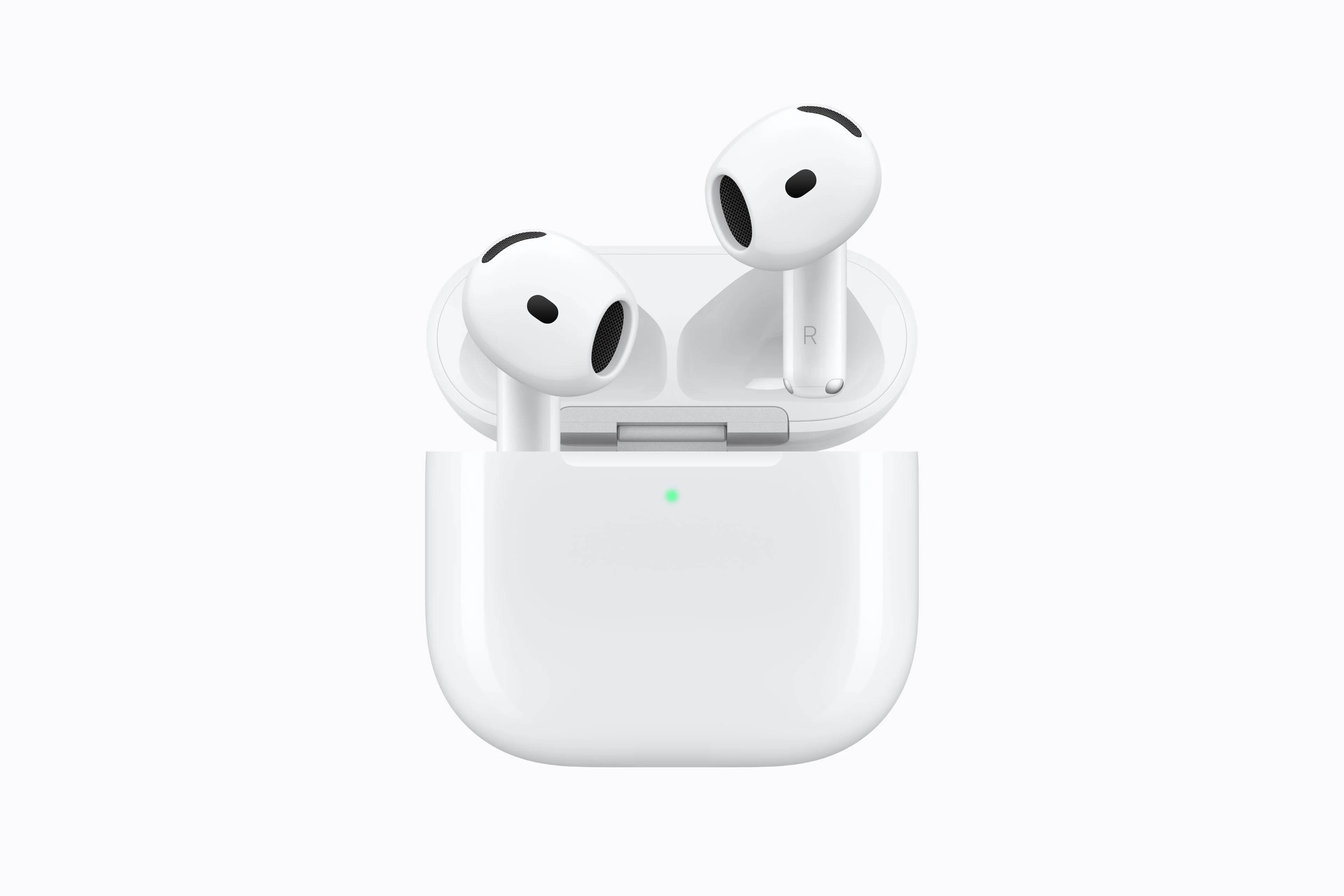
The AirPods 5 get a redesign on the inside meant to fit more ear shapes while sounding better. Active noise cancellation is up 50% over the AirPods 4, transparency mode does a better job of letting voices through without background noise, and a new adaptive mode auto-switches between ANC and transparency depending on the environment. Siri AI is baked in, so you can talk to Siri directly through the earbuds, and last year’s Live Translation feature carries over. Apple also says they’re more durable than before.
Pricing starts at $129, with a $149 version adding a wireless charging case and on-stem volume control — a first for the standard AirPods line, after being available on AirPods Pro for a while.
Apple Watch
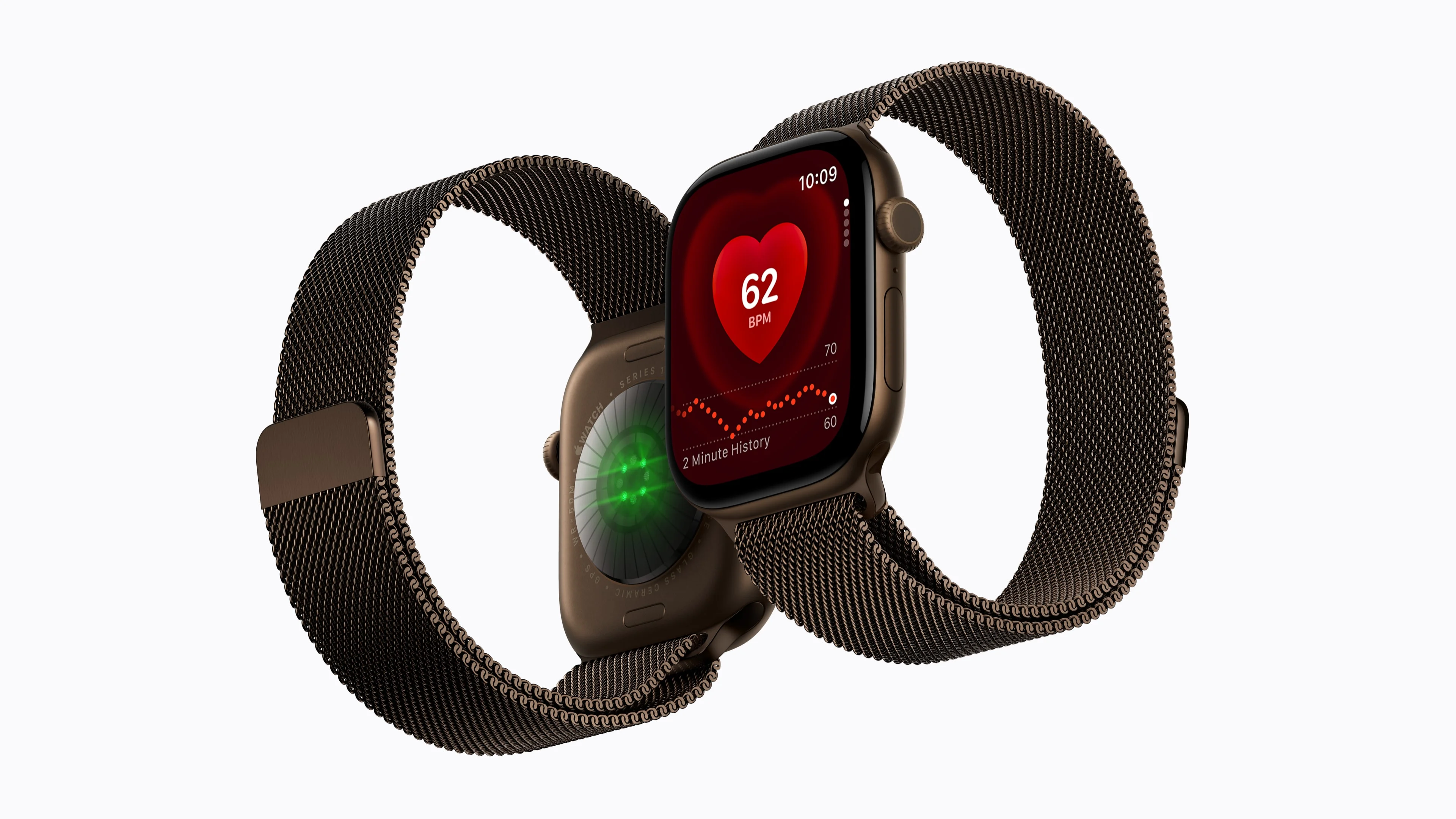
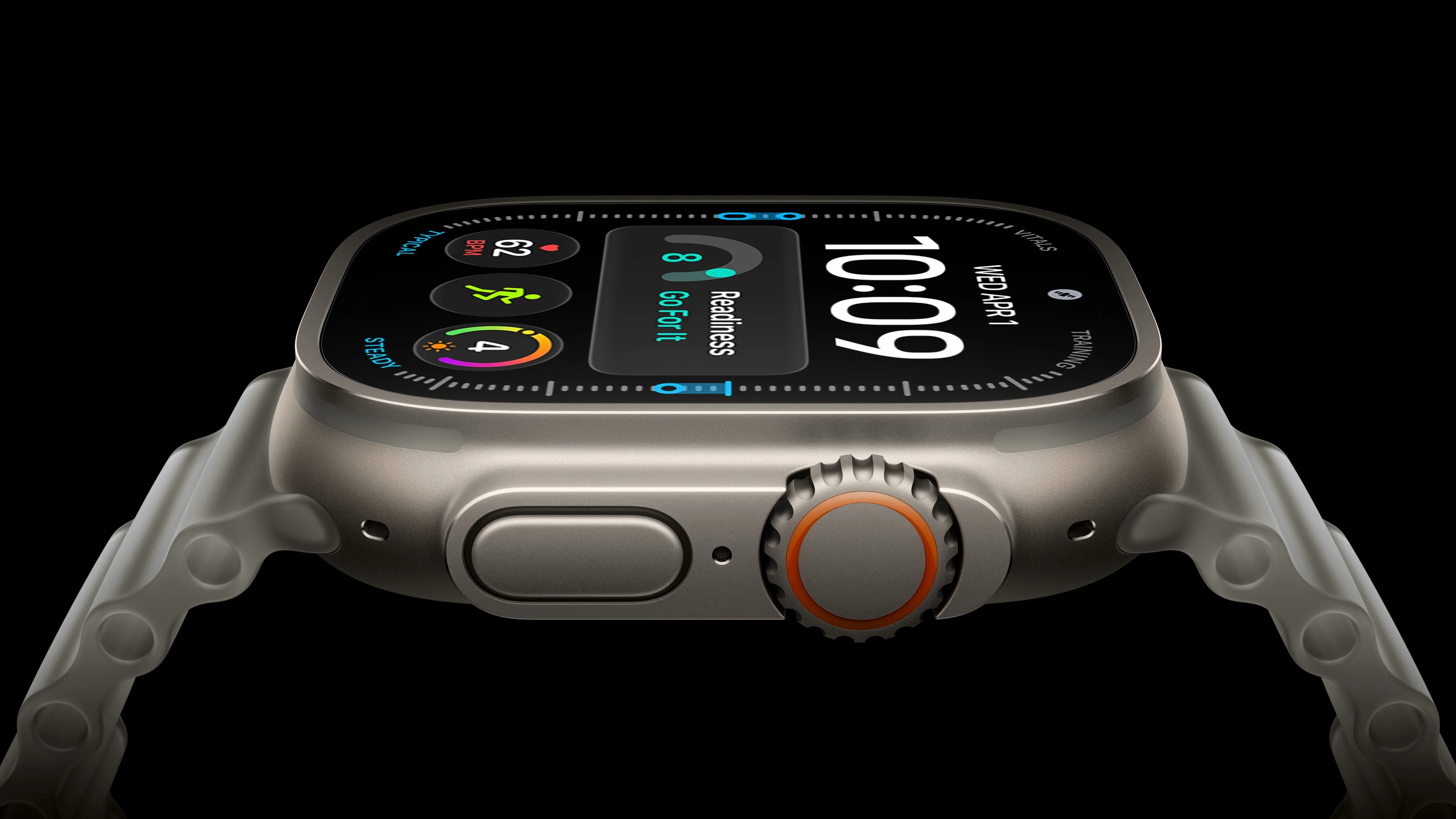
The Watch segment opened the usual way: reminding everyone that the Apple Watch has, on occasion, saved someone’s life. This year brings the Series 12 and Ultra 4, and design-wise both are nearly identical to their predecessors aside from new bands. Under the hood is the new S11 chip, which now includes an audio “exclave” to help with audio processing.
Health and fitness. The health sensing system got a real overhaul: increased electrode surface area, a redesigned photodiode, and brighter LEDs for heart rate detection. Background heart rate is now sampled every 5 seconds throughout the day — 60 times more often than before — and heart rate variability is measured every 5 minutes, a 24x increase. Apple says the sensor system was tested against clinical ECG machines and claims it’s now the most accurate heart sensing on any wearable. HRV is now included directly in the Vitals app.
There’s also a new Readiness score: each morning, the Watch analyzes your vitals and tells you whether to push harder or ease off. You can request certain lab tests through the app, and a new Insights tab summarizes your health trends and offers personalized guidance and recommendations based on your data. A new “Health Age” feature estimates your biological age from your vitals (brace yourselves), with category-by-category insight, and Apple demoed a VO2 max-style fitness test using the Watch paired with an iPhone to assess how well your body moves.
Apple Intelligence on the wrist. A new Audio Intelligence feature uses the Watch’s microphone to analyze your day, including sound recognition for things like sirens or alarms. Live Rewind lets you instantly replay the last 15 seconds of a conversation — double-press the digital crown and the Watch transcribes it on the spot. Siri Recap takes high-level notes from meetings, with Apple emphasizing that no audio recording is ever stored or accessible.
Grab bag. New bands as usual, including fresh Nike and Hermès collaborations. Finishes include space gray, black, Ceramic Shield 2, titanium, and ceramic options, plus the Apple Watch Hermès line. The Ultra 4 gets two days of battery life and a new titanium Hermès band. The segment wrapped with a fitness-focused video that — somewhat amusingly — was a reminder of the era when Apple Watch was marketed as much as a fashion accessory as a health device.
iPhone Duo
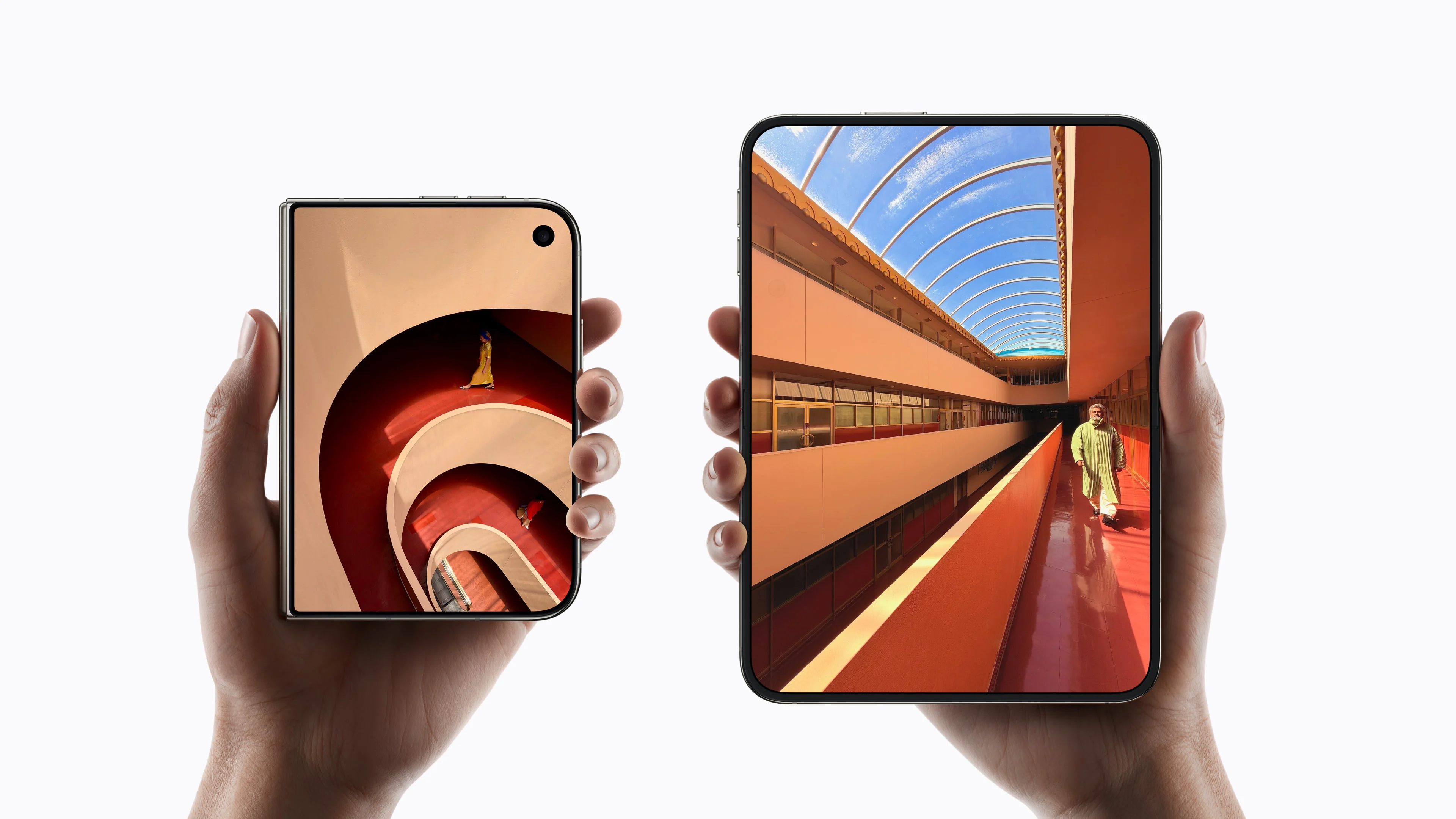
Then came the “one more thing” moment, circling back to that Intelligent Hub framing one more time — because of course, the hub is the iPhone. Apple spent real time on the design philosophy here, taking a swipe at competitors who, in their framing, just stuck two phones together awkwardly. The intro video that followed handled the fold-to-open transition in a genuinely well-done piece of editing.
Design. The iPhone Duo is sized similarly to a passport, and its asymmetric shape is meant to evoke a book, nudging you to open it. It’s clearly iPad-inspired without actually running iPadOS. Both the inner and outer displays maintain a 1.4:1 aspect ratio, landing close to IMAX proportions. The FaceTime camera sits underneath the screen. The hinge uses a variable torque profile with magnets on the inner fold to help it snap shut, built from Ceramic Shield and carbon fiber, with Apple claiming over 100 individual components in the hinge mechanism alone. The frame is titanium with a mirror finish.
iOS 27 on Duo. Controls live along the side, and the dock only appears on the right — an odd choice for left-handed users. The device can run two apps side by side or a single app scaled up across the full display. Fold it partway and it works like a mini laptop or a photo frame/clock, not unlike the old dual-screen Nintendo DS form factor. You can run two Safari windows side by side (and this extends to other apps too), pair two apps so they launch together, and the software responds to the physical angle of the fold, including use cases where the device is only slightly closed.
Displays and other features. The inner display is a 7.6" Retina XDR panel with a nanotexture finish meant to solve the crease and “plastic feel” problems that have plagued foldables. It uses a multi-layer lamination design that Apple says is 40% stiffer, with one layer built from foldable glass — Apple spent a lot of stage time on this display alone. The outer display is 5.4", about 90% the size of the iPhone 18 Pro’s screen. Apple Pencil support is available, but only on the USB-C model. Authentication is handled through Touch ID or your Apple Watch. Speakers sit at the top-left and bottom-right corners. Colors are limited to black or white.
For developers, Apple previewed updated APIs, name-checking apps like Zoom and Slack adapting to the dual-screen and folding layout.
Under the hood, it’s the same A20 Pro as the iPhone 18 Pro, paired with a new display engine to help drive the two screens, and Apple’s own C2 modem, which the company says is faster and more efficient — and is eSIM-only worldwide. Battery is split across two cells, one on each side of the fold, rated for 31 hours of video playback.
Camera system. The main “Fusion” camera is a 48MP sensor with 2x optical zoom, joined by an ultrawide lens. There’s a Center Stage-style outer camera and an under-display camera on the inner screen. The standout trick is being able to fire all the cameras simultaneously during a FaceTime call, and the fold makes it far easier to shoot selfies since the display and main camera can face you at the same time. A “Duo Preview” mode lets you partially open the fold so your subject can see themselves while you shoot — a genuinely useful, relatable fix for anyone who’s ever tried taking a photo of their spouse. There’s also “Kid Cue,” a cute Snoopy animation designed to get children to look at the camera (one has to wonder what that partnership cost), and “Smart Take,” which automatically snaps a photo when your subjects look ready.
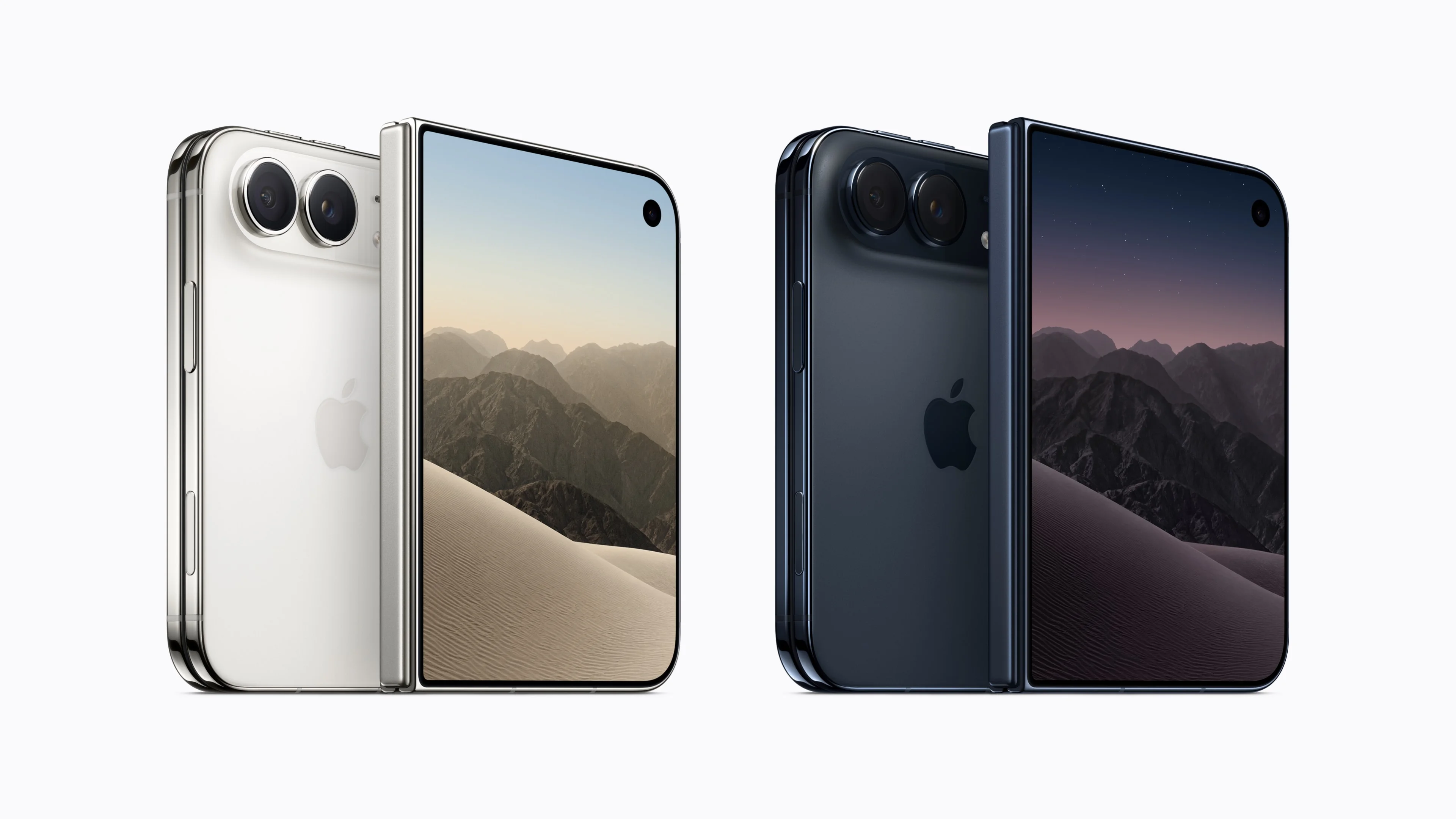
Two cases are available from Apple at launch. Pricing starts at $1,999 for the 256GB model, with a 2TB option arriving in October, when the device also starts shipping.
Wrap Up
The show closed with Ternus delivering the now-standard closing message: Apple products, together, as the center of your intelligent hub, all in service of making your life better.
Conclusion
What’s noticeably missing from this event is any update to the base iPhone or the iPhone Air. Apple clearly designed this keynote to put the iPhone Duo front and center, and it worked — reaction videos flooded YouTube almost immediately after the show ended.
As always, Apple wasn’t first to the foldable phone category, but it once again found something new to say despite arriving late to the party. At the high end, the lineup now genuinely forks into two philosophies: the best camera system money can buy, or the folding form factor — not unlike Porsche offering the 911 Turbo and 911 GT3 at similar price points but for entirely different reasons.
Apple’s iPhone positioning finally feels clear: the 17e covers the low end and fleet buyers, the 17 serves the mass market, the 18 Pro is for the high-tech crowd, the Air plays to the high-fashion buyer, and the Duo now sits at the top as the flagship fashion phone. Don’t be surprised if an iPhone Ultra shows up down the line to claim the flagship tech-phone crown outright.
Love this? Consider buying me a coffee!