HomeView
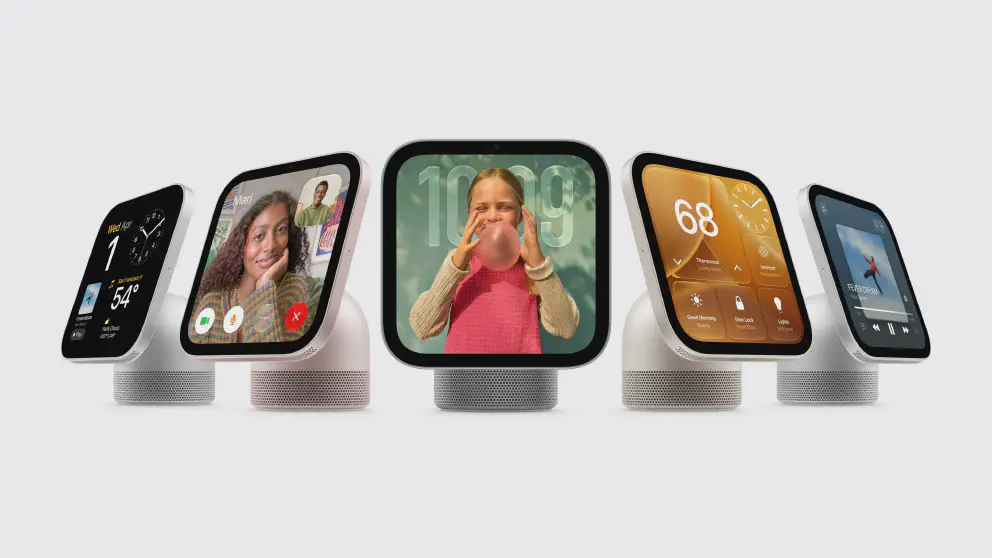
On October 13, Apple announced a revamp of its home lineup. There’s a refreshed HomePod mini and a new Apple TV 4K, but the star is a brand-new product: the HomeView, Apple’s first smart display.
My first reaction was that it looks like an enlarged Apple Watch crossed with an iPad that’s been stuck on top of a speaker. BGR made a similar observation, saying it reads more like a giant watch than a tablet. Whether you love the look or not, the more interesting question is what Apple is trying to do with it, and why it took this long.
What you’re getting
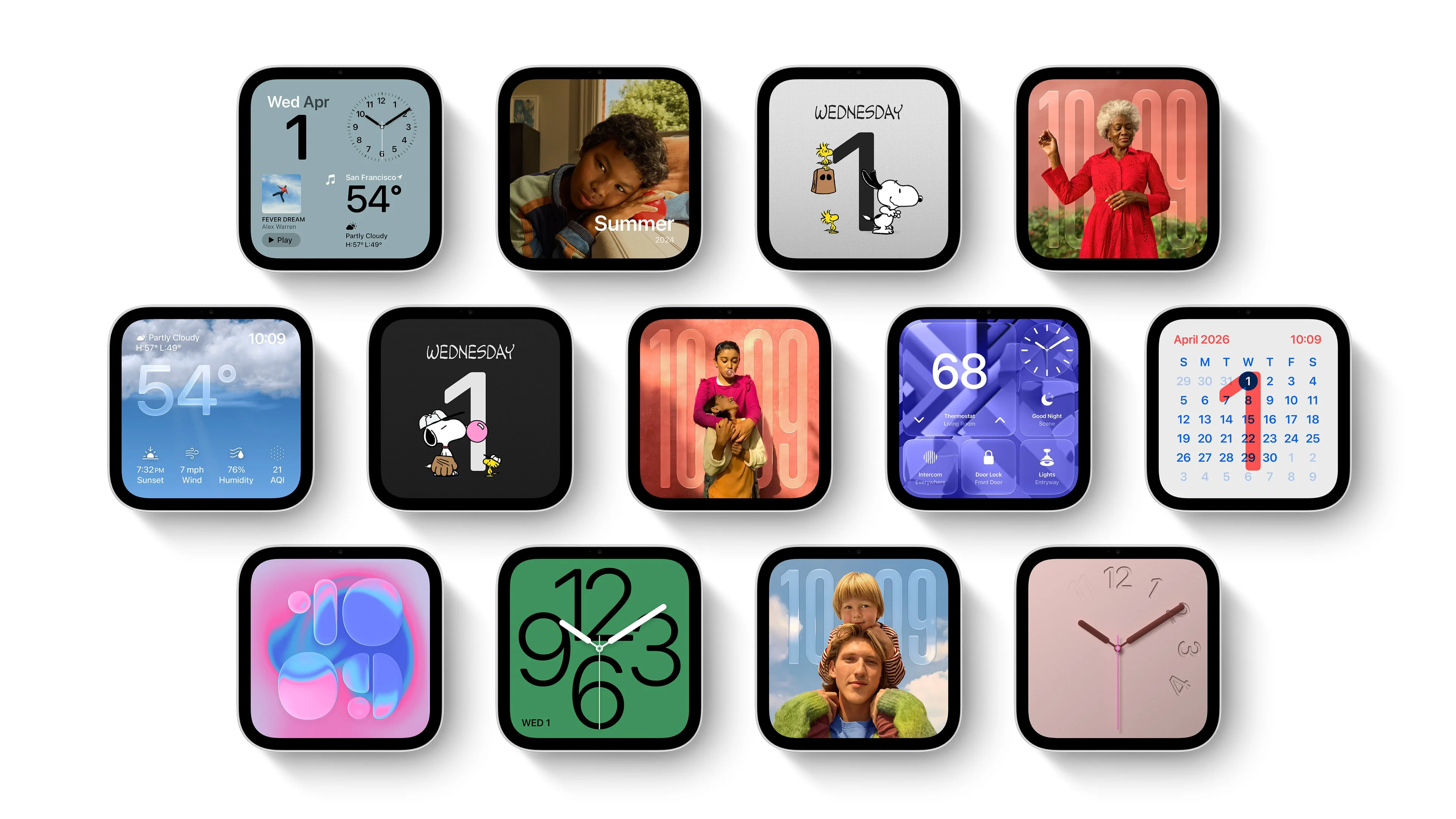
The basics: a 7-inch Liquid Retina display on a domed aluminium base, powered by an A18 chip, with a 12MP Center Stage camera for FaceTime (SoyaCincau). In the US it’s $299 and ships on November 13.
Siri AI. Everything you love (or hate) about Siri is here, and it’s one of the two main ways to interact with the device; the other is touch. This is the new, more conversational Siri, and it’s reportedly built on Google’s Gemini technology. Requests can run on the device or through Apple’s Private Cloud Compute.
It recognises faces, up to six of them. Apple’s Family Sharing plan also tops out at six people, which is probably not a coincidence. When the camera recognises you, your Messages, FaceTime, Calendar and other personal info appear; for everyone else, they stay hidden. Apple says you also need a paired and recently unlocked iPhone or iPad nearby for that personal content to show up.
It’s a home control panel. HomeView is built to control lights, locks, thermostats and cameras through Apple Home, and Apple launched its own accessory range with LG and Schneider Electric at the same time. When someone’s at the door, the display chimes, and there’s an intercom feature that can message other HomeViews, HomePods, iPhones, iPads and Apple Watches.
Third-party apps come through CarPlay. There’s no App Store and, for now, no way for outside developers to build for it. Instead, HomeView borrows the CarPlay framework: Apple’s developer guide says CarPlay audio and video apps work on HomeView with no changes, and widgets from CarPlay can show up too. So Spotify should work out of the box. YouTube, Netflix and Disney+ are possible, but only if they add CarPlay video support. Whether messaging apps like WhatsApp make the jump is still unclear, so I wouldn’t count on it yet.
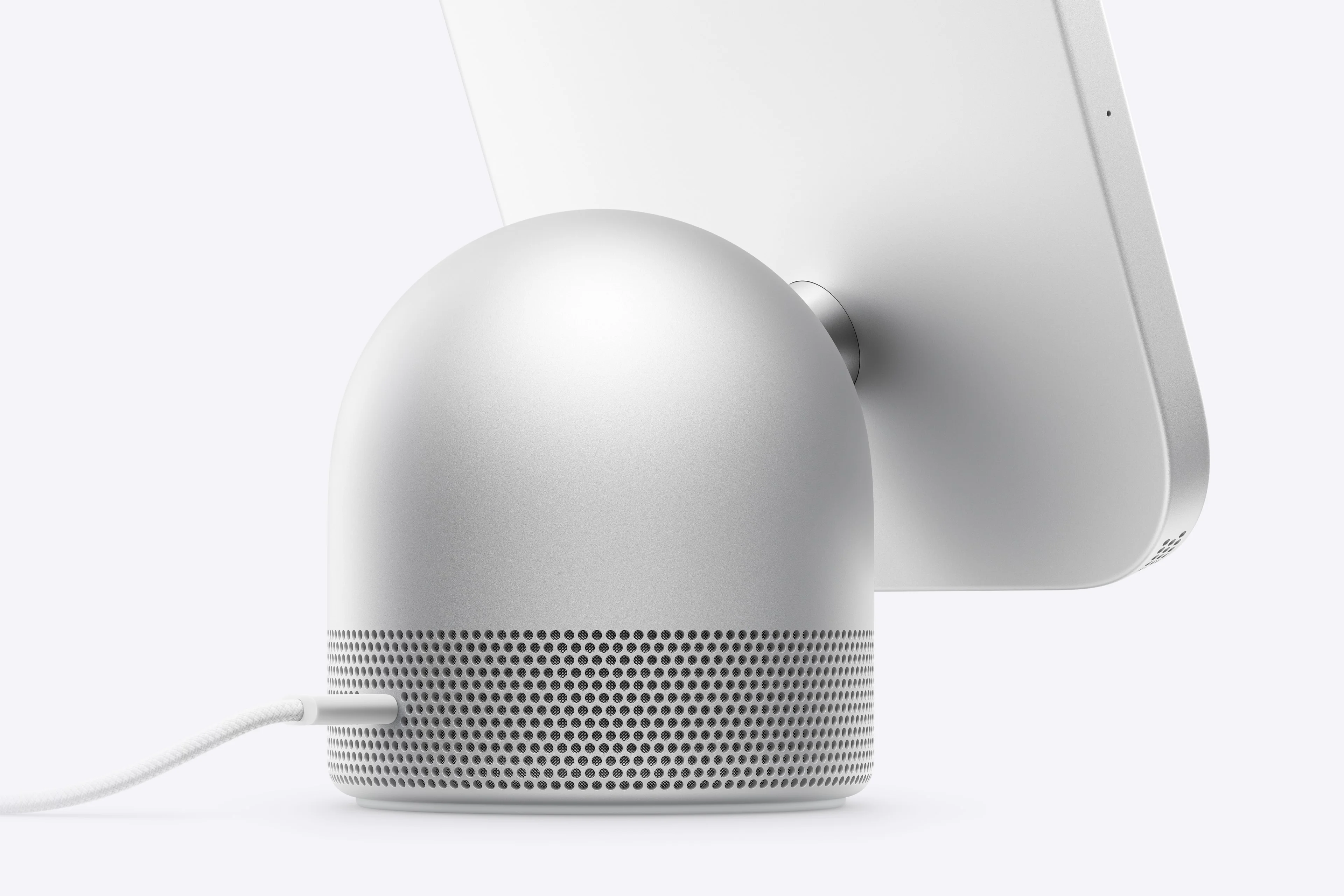
The speaker is serious on the tabletop model. It has two full-range drivers plus a down-firing woofer and dual passive radiators. The software is a stand-alone OS that, to my eye, feels like a mix of watchOS and iPadOS, so it should be familiar from the first minute.
One oddity: the spec sheet lists an accelerometer, alongside ambient light and temperature and humidity sensors. That’s strange for something that sits on a counter or hangs on a wall. Apple hasn’t said why. My guess is that it helps the device work out how it’s positioned or detect knocks and movement, but that’s speculation until Apple or a teardown says otherwise.
The wall-mounted version
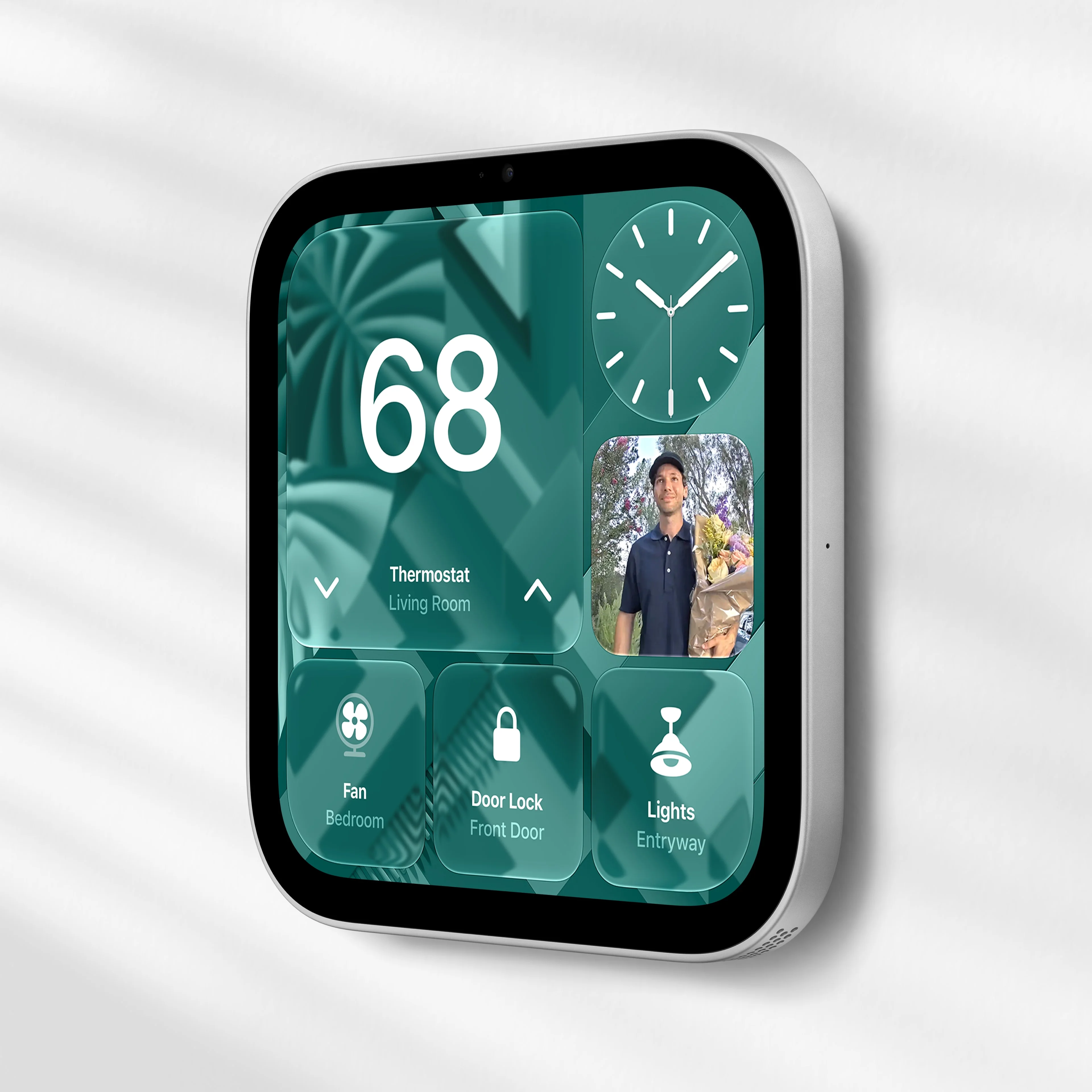
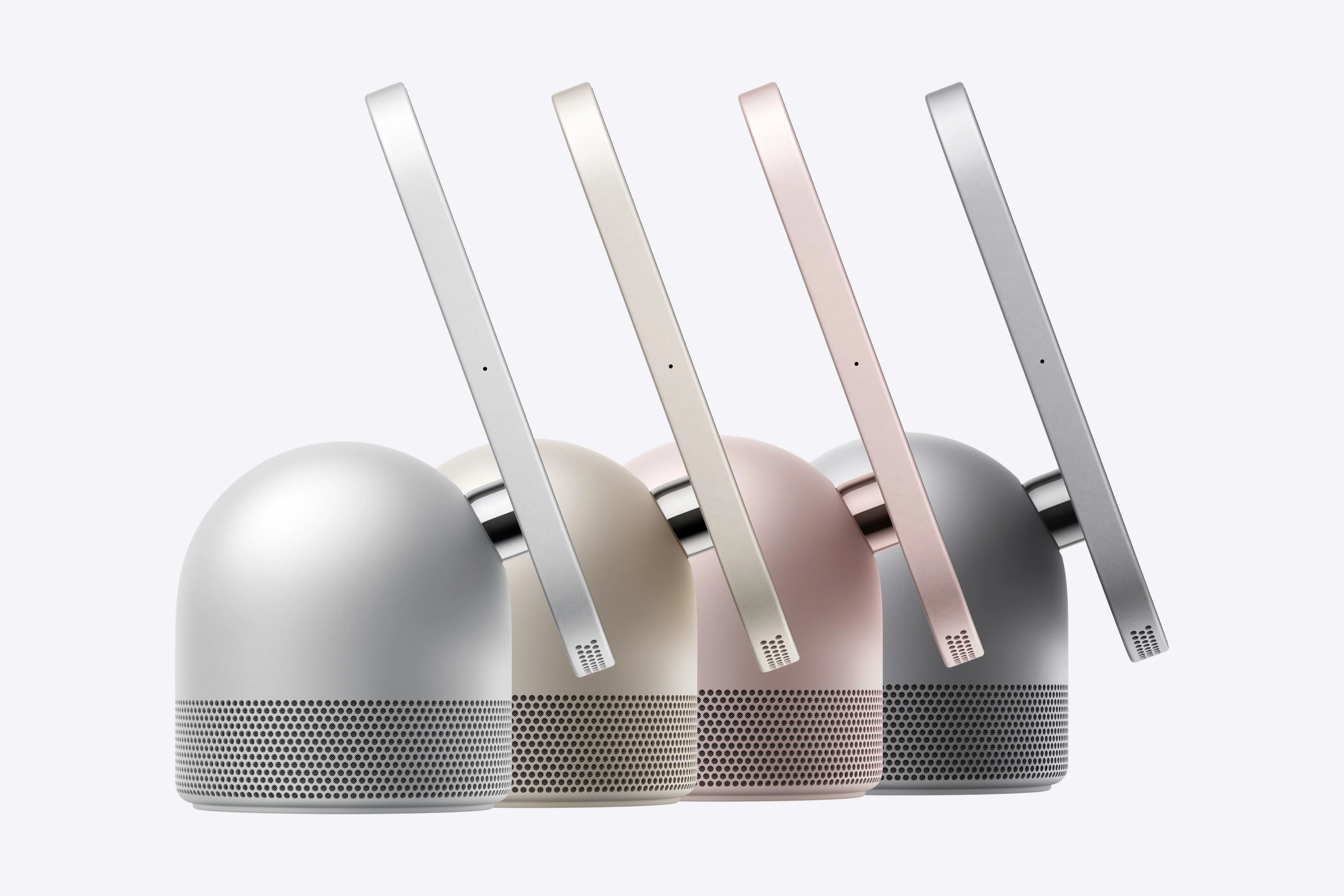
There’s a wall-mounted HomeView at the same US price, but it’s a different proposition. It keeps the two drivers but drops the woofer and passive radiators, relying on audio tuning for wall placement instead. It also comes in only two colours, and it doesn’t come with a mount or a power adapter. Apple’s support page says it requires a mount and power solution sold separately.
That’s where the real cost shows up. In Canada, for example, both models are C$429, but the Schneider-made mounts start at C$79.95, and Apple will also sell you a 40W power adapter for C$55. MacRumors summed it up as paying more for less speaker. We’ll get a better picture once it ships and reviewers get their hands on it.
The fine print
A few things worth knowing before you get excited:
- It leans heavily on your iPhone. HomeView has its own AI-capable chip, but some of the most personal Siri AI features and camera features still need an Apple Intelligence-enabled iPhone or iPad. Apple’s third-party app plan works the same way.
- Siri AI is launching in beta, in English only. It’s initially limited to eight countries: the US, Australia, Canada, India, New Zealand, Singapore, South Africa and the UK.
- Not in the EU for now. Apple says Siri AI isn’t available on iOS there, so HomeView won’t be sold in the EU while it works out a path forward with regulators.
- Availability varies. Apple hasn’t announced HomeView pricing or availability in some markets, Malaysia included.
Why Apple is doing this, and why now
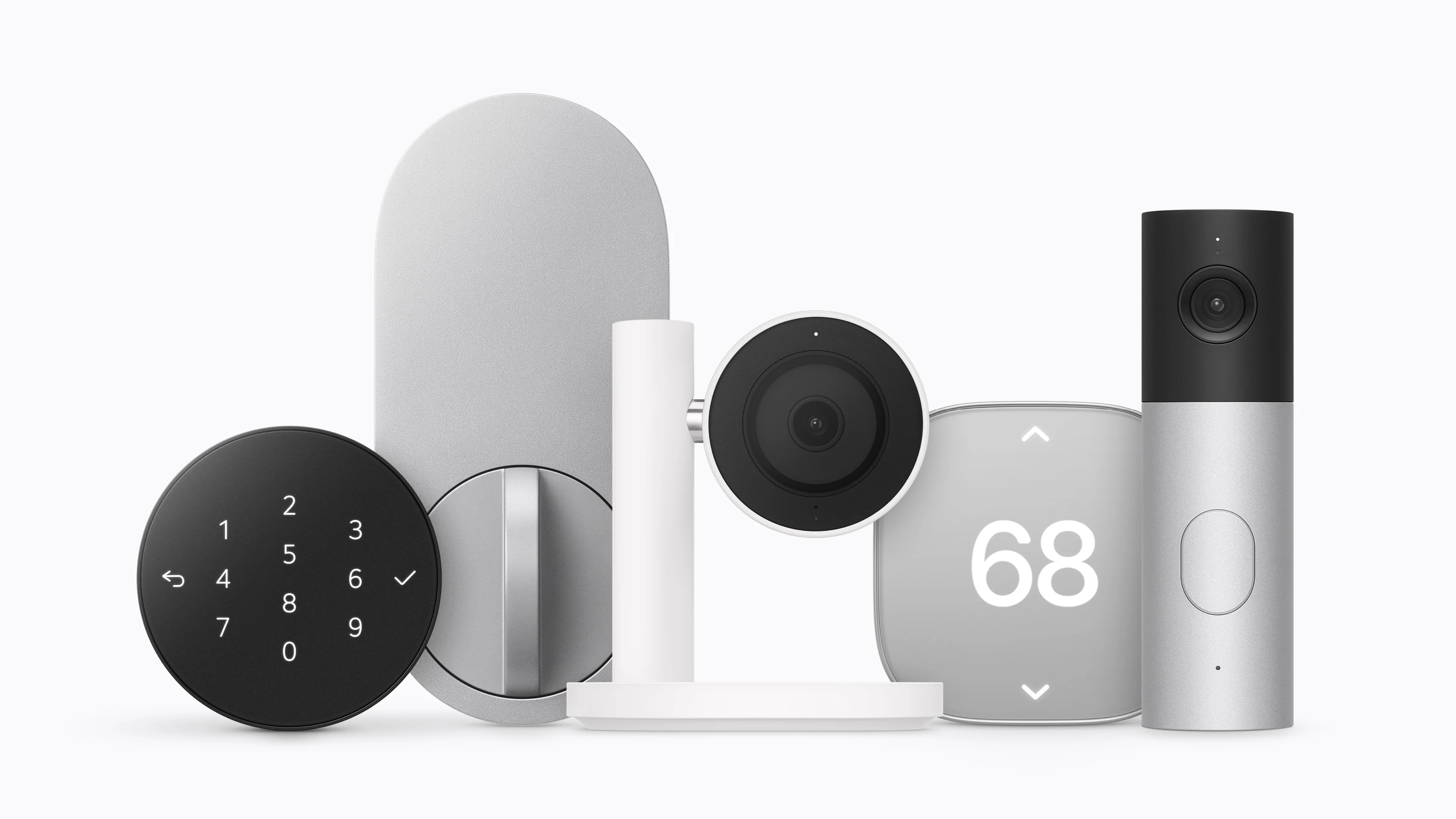
For years, Apple has been a laggard in smart devices. It’s there, and it’s not small, but it was never the focus. The data backs that up. Apple doesn’t break out Home revenue, but it’s lumped into a category called Wearables, Home and Accessories, which brought in $35.7 billion in fiscal 2025, down 4%, compared with $209.6 billion for the iPhone. That category also contains the Apple Watch and AirPods, so the Home slice is a small part of a segment that’s under 9% of Apple’s revenue. When iPhone makes that much, it’s easy to see why Home was a side quest.
The product cadence tells the same story. Amazon and Google launched more than 40 smart speakers and displays over the last decade, versus Apple’s three. Amazon’s Echo Show got there first, in 2017, and Google followed with the Home Hub in October 2018. Apple is arriving roughly eight years after Google and nine after Amazon.
So what changed? The most obvious answer is leadership. John Ternus, a hardware engineer who ran Apple’s hardware engineering, replaced Tim Cook as CEO on September 1, with Cook moving to executive chairman. Commentators argued that Apple wanted a builder at the top during an AI inflection point, and AppleInsider reports that Ternus has taken some responsibility for Apple falling behind in smart speakers and is championing new home devices. Having the CEO personally invested is a real difference from a pet project run by a mid-level team.
The other driver is AI. Bloomberg has reported that Apple’s home devices were delayed while it struggled to get its AI models and next-generation Siri up to par. A shared screen in the kitchen that you can talk to, and that knows who is standing in front of it, is a good place to show that Siri has caught up. It also fits a problem the smart home has never solved well: one device that everyone in the house can use, while still feeling personal to each person.
So, is Apple going after the home?
Maybe. Apple’s approach is clever and a bit lazy at the same time. It skips building a whole new developer platform and makes the iPhone the platform instead, with your apps, your data and your identity all coming from your pocket. That’s cheap for Apple and familiar for users, but it also means HomeView is only as good as the iPhone next to it, and it’s a weaker pitch for households that aren’t all-in on Apple.
The hardware pricing is competitive: at A$449 in Australia, it’s A$20 above an Echo Show 11. The wall-mount pricing is the part that’s hard to defend. And if Siri AI in beta isn’t convincing, no amount of nice speaker will save it.
TechCrunch noted this may only be the first phase of Apple’s smart home plan. I’d agree. Apple has finally shown up, but showing up isn’t the same as winning. The real answer will come after it ships on November 13, once reviewers have spent time with Siri AI, the third-party app experience and the wall-mounted model. Only time will tell.
Love this? Consider buying me a coffee!